Simple Techniques — Caesar Cipher, Scytale, Enigma
Three techniques, three eras
These three systems span 2,500 years of cryptographic thinking. Each one solved the problems of its time — and each one teaches us something about what makes a cipher strong or weak.
The Scytale — security through shape
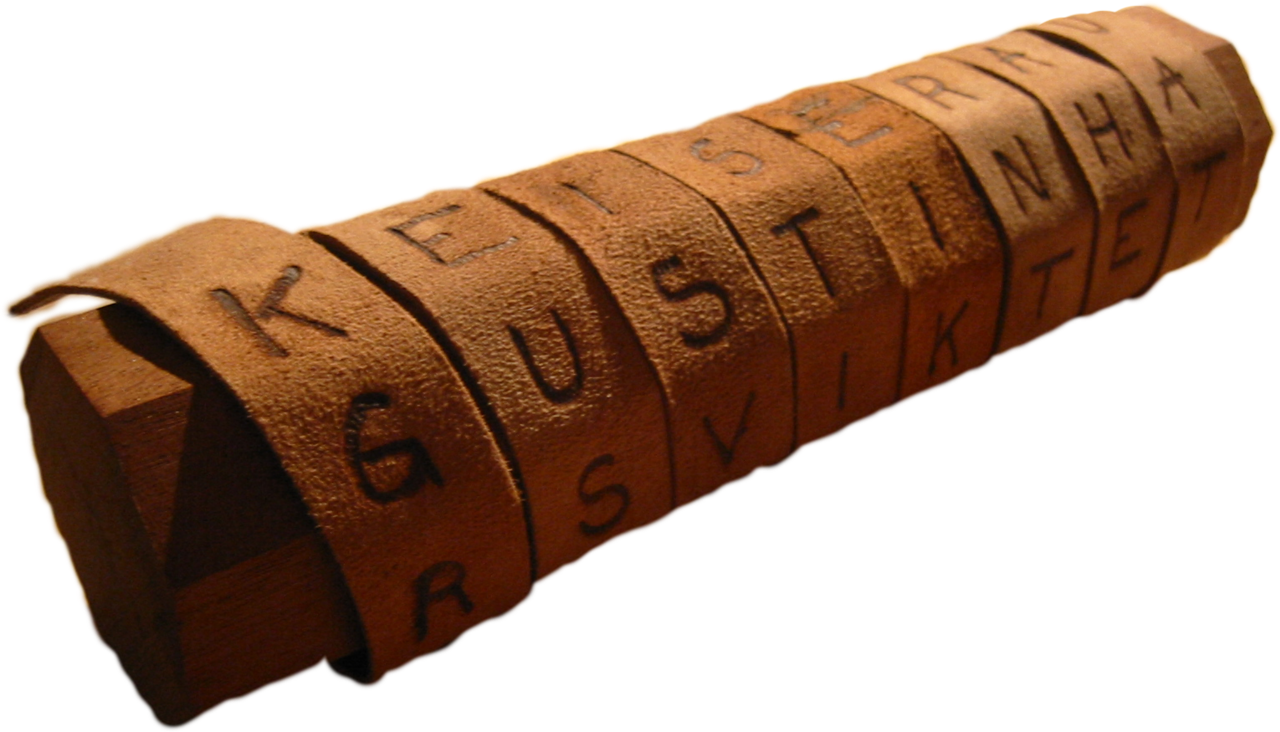
When: ~600 BC, Ancient Sparta Type: Transposition cipher (rearranges letters, doesn't change them)
A leather strip is wound around a cylindrical rod. The message is written along the rod. When unwound, the letters are scrambled.
``` Rod: A T T A C K A T D A W N
Strip: A A T T A C K A T D A W N (scrambled when unrolled) ```
The key: the diameter of the rod. Only a matching rod can reorder the letters correctly.
The weakness: the letters themselves are unchanged. There's no substitution, only rearrangement. With enough ciphertext and some guesswork about rod size, it can be broken mechanically.
What it teaches: the concept of a physical key — a shared secret that enables both encryption and decryption.
The Caesar Cipher — security through substitution
When: ~60 BC, Ancient Rome Type: Substitution cipher (replaces letters with other letters)
Each letter in the plaintext is shifted forward in the alphabet by a fixed number.
`` Shift of 3: A → D N → Q B → E O → R C → F ... ``
Encrypting JULIUS: ``` J → M U → X L → O I → L U → X S → V
Ciphertext: MXOLVX ```
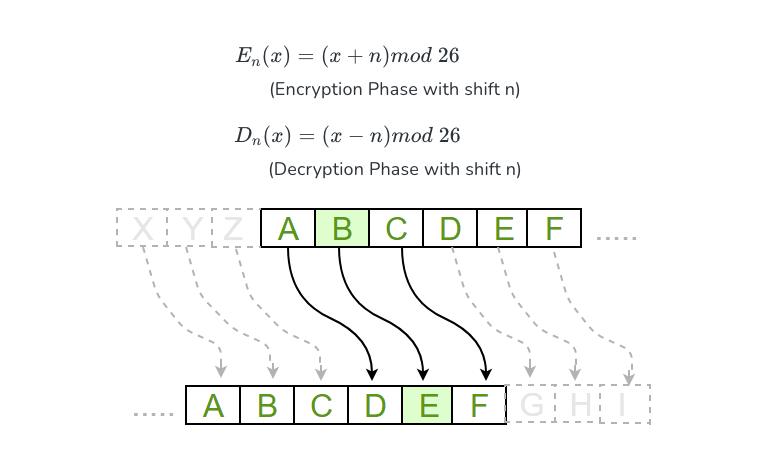
The key: the shift number (1–25).
The weakness: only 25 possible keys. An attacker can try all of them in seconds — or use frequency analysis to identify the shift from letter distribution patterns.
What it teaches: substitution alone isn't enough. A cipher with a tiny keyspace is no cipher at all.
The Enigma Machine : security through complexity
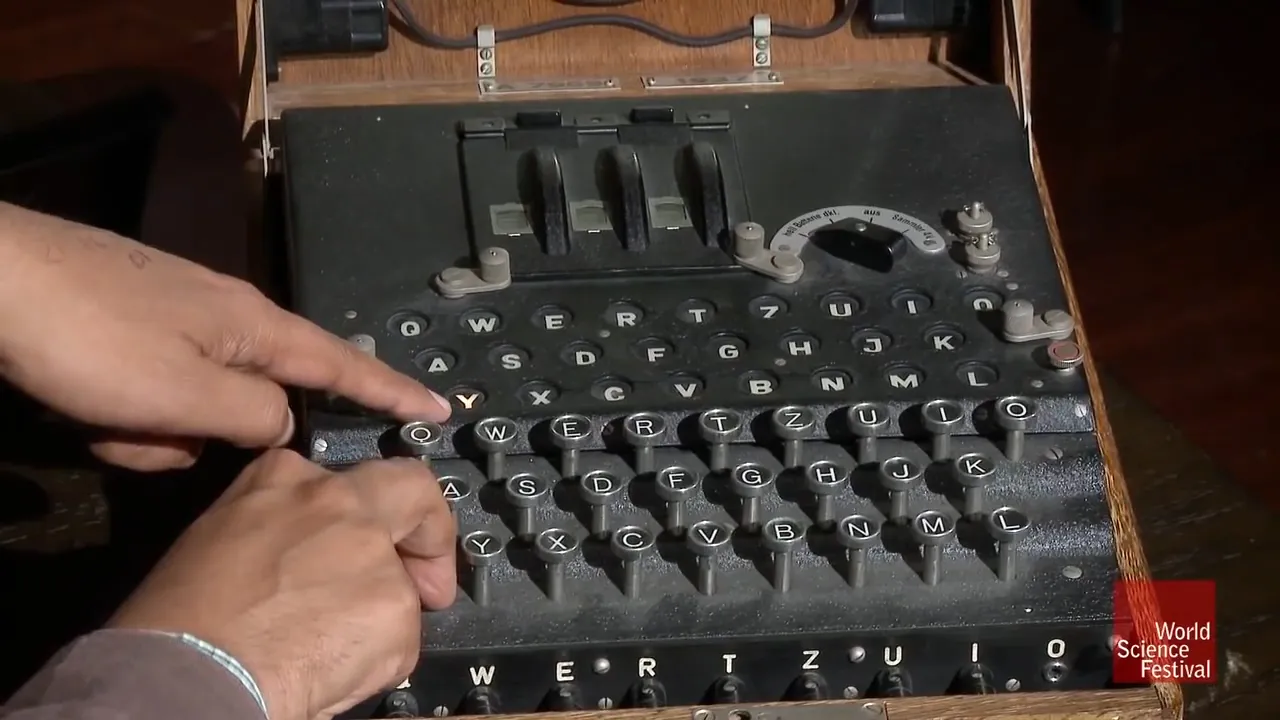
When: 1920s–1945, Germany Type: Polyalphabetic electromechanical cipher
Enigma was a machine with multiple rotating rotors, each with 26 positions. When you pressed a key, an electrical signal passed through the rotors, a reflector, and back — lighting up a different letter on the output board.
Crucially: after each keypress, the rotors advanced. So the same letter typed twice would never produce the same output letter twice.
`` Day 1, first keypress: A → G Day 1, second keypress: A → T Day 1, third keypress: A → M ``
The daily settings (rotor selection, starting positions, plugboard connections) formed the key. With three rotors chosen from five, each with 26 starting positions, plus a plugboard with 10 pairs — the number of configurations exceeded 150 trillion.
The key space: 158,962,555,217,826,360,000 possible settings.
The weakness: Enigma had a fatal flaw: a letter could never be encrypted as itself. A pressed, Enigma would never output A. Turing's team exploited this alongside known message formats (standard weather reports always started the same way) to narrow the search space dramatically.
What these three systems share
All three are symmetric — the same key (or device) is used for both encryption and decryption. The key must be shared in advance.
All three rely on keeping the key secret while the method is fixed. That's exactly Kerckhoffs's principle in practice: the security lives in the key, not the algorithm.
The transition from these systems to modern cryptography is a story of making that key mathematically impossible to derive — even when you can see everything else.
Answer the quiz correctly to continue →
What fatal structural flaw in the Enigma machine did Turing's team exploit to break it?